
Let It Slide!
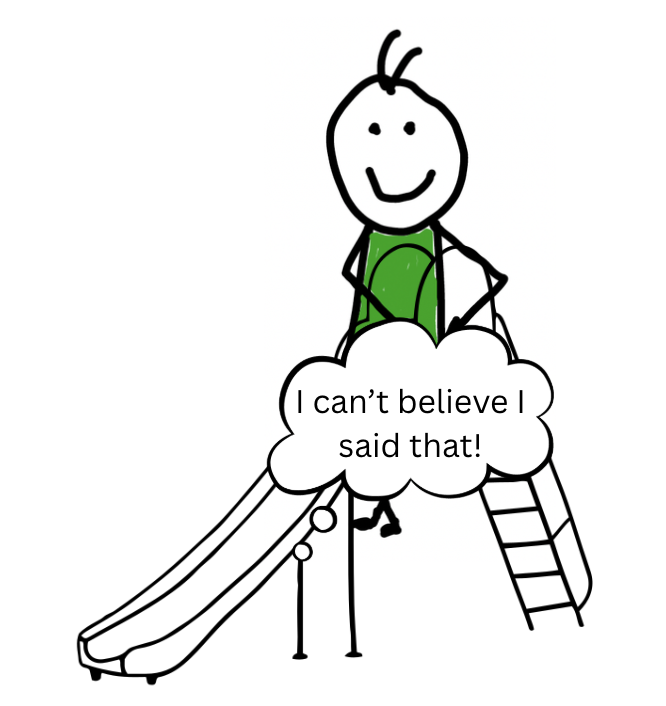
A Tool for Releasing Unwanted Thoughts
Have you ever had a thought that just wouldn’t leave you alone? No matter what you do, it keeps buzzing in your brain like a gnat that refuses to go away. These thoughts hijack your mood and loop in your mind like a song you can’t stop humming.
Maybe it’s something someone said, something embarrassing you did, or a moment that keeps replaying. I call them “sticky thoughts.” They’re the ones that stick with us all day, clogging up our mental space.
And if we experience sticky thoughts, you can bet our kids do too. In fact, they often feel them even more strongly. They just don’t always know what to do with them.
We’ve all tried ignoring the thought (which rarely works) or thinking about something else (which can help, but not for the really sticky ones). Sometimes, we need a visual and physical way to let it go.
That’s where the S.L.I.D.E. Tool comes in — a simple, five-step process to help kids see the thought, feel it, and release it.
The S.L.I.D.E. Acronym
S – See the Sticky Thought
Notice the thought that’s stuck — the one that keeps replaying in your mind.
👉 “I can’t believe I said that.”
👉 “Why didn’t they invite me?”
👉 “I messed up that test.”
The first step is awareness. You can’t let go of something you haven’t noticed yet.
L – Label It
Say what it is (out loud or in your head).
👉 “This is a worry.”
👉 “This is a replay.”
👉 “This is a what-if.”
Labeling helps your brain create distance. You are not your thoughts; you’re the thinker who decides which ones to keep and which ones to let slide.
I – Identify the Feeling
What feeling comes with that thought?
👉 “I feel embarrassed.”
👉 “I feel lonely.”
👉 “I feel frustrated.”
Naming the feeling helps calm the brain’s emotional center. It’s like saying, “I see you, emotion.” Once a feeling feels seen, it starts to soften. It’s like turning on the light in a dark room.
D – Drop It on the Slide
Now comes the fun part. Picture the thought sitting at the top of a big, bright slide. Take a deep breath… and drop it.
Watch it whoosh down — spinning, twisting, maybe even glittering — until it’s out of sight.
This is the physical release — the moment they decide, I’m done holding this.
👉 “I don’t need to carry that thought anymore.”
E – Exhale as It Slides Away
Take one more deep breath and let it out slowly as the thought disappears. Feel what’s left behind — space, calm, lightness, peace.
Breathing completes the loop. It tells the brain and body, We’re safe now.
👉 “It’s gone. I can move on now.”
When to Use the S.L.I.D.E. Tool
The beauty of this tool is that it works anywhere, anytime.
Kids can use it whenever their mind feels stuck in a replay loop, such as:
After hearing a mean comment on the playground
When they keep thinking about a bad grade
When they see friends hanging out without them
When they make a mistake and can’t stop thinking about it
When they’re worrying about something they can’t control
When they replay a tough memory before bed
It’s especially powerful at bedtime (when worries love to visit) or during social stress moments when thoughts spiral fast.
How Parents and Teachers Can Reinforce It
Kids learn tools best when adults model them. Here’s how to help them make S.L.I.D.E. second nature:
Use Language Cues
Ask: “Is that a thought you want to keep or one you want to let slide?”
Model It Yourself
Say aloud:
“I was frustrated about that meeting earlier, but I’m choosing to let it slide.”
or
“That thought’s sticky. I’m going to drop it on the slide.”
This normalizes emotional release as a skill, not a struggle.
Add Movement
Have your child physically “slide” their hand down their arm or imagine dropping something from their palm.
This sensory connection helps the brain release more effectively.
Create a ‘Let It Slide’ Corner
Draw or craft a visual slide on paper or a bulletin board. Kids can write sticky thoughts on slips of paper and “slide” them into a decorated box or bin.
In a classroom, assign a daily “Slide Captain” to empty the thought box into the main trash, symbolizing a group release.
Why It Works
The brain processes images faster than words. By seeing the thought slide away, kids engage both the logical and emotional sides of the brain, giving them a clear sense of agency over their inner world.
It’s not about denying thoughts or pretending everything is fine. It’s about teaching kids they can’t control every thought that pops in, but they can control which ones they hold onto. And that, in itself, is powerful.
Remember…
Not every thought deserves to stay. Some are meant to slide away.
So next time a sticky thought tries to hijack your day (or your child’s), just take a breath, drop it on the slide, and watch it go.
Let it slide — and make room for peace.

Want to help this tool stick? Try the 7-Day Let-It-Slide Challenge with your child this week.
Encourage your kids (or your class) to use the S.L.I.D.E. tool every day for a week. Have them share one “sticky thought” they let slide and how they felt afterward.
For extra fun: Use the “Slide Tracker” chart: every time they use the tool, they color in a step on the ladder leading up to a playground slide. When they reach the top, celebrate their “Mind Mastery Moment.”