

The Mind Master Toolkit
Practical tools to help children understand their thoughts, build emotional strength, and grow into confident decision-makers.
At Junior Mind Masters, we believe children can learn one of the most important life skills of all: how to understand and guide their own minds.
The tools below are designed to help you introduce these ideas in simple, engaging ways. Each one gives your child a chance to practice skills like recognizing thoughts, managing emotions, building confidence, and responding thoughtfully to challenges.
Some tools are quick daily practices. Others are worksheets, reflection prompts, or activities you can do together.
Choose a tool that fits your child’s needs and start there. Small moments of awareness can lead to powerful changes over time.
Click any tool below to learn more and download the printable.
We’ll continue adding new tools as the Junior Mind Masters toolkit grows.
Getting Started
A simple introduction to the core ideas behind Junior Mind Masters. This starter kit helps children begin understanding how their thoughts influence their feelings and actions, and introduces practical tools for building confidence and emotional awareness.
Understanding Thoughts
-
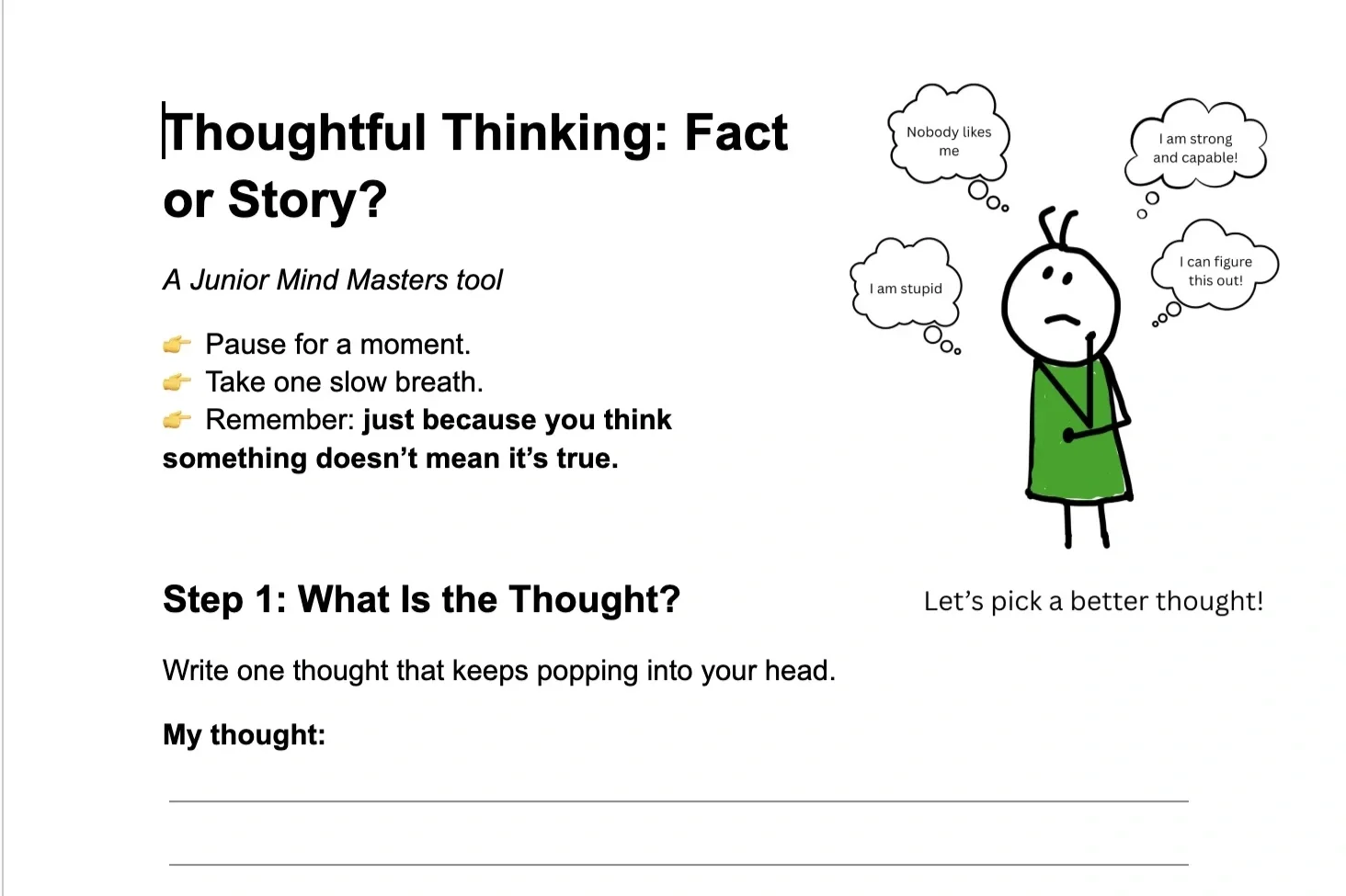
Thoughtful Thinking: Fact or Story?
This worksheet helps children learn an important thinking skill: recognizing the difference between facts and the stories our minds create. It encourages kids to question assumptions and think more clearly.
-

My Clue Collecting Journal
This journal helps children become curious investigators of their own thoughts and experiences. By collecting clues from their actions, successes, and challenges, kids begin to better understand themselves.
-
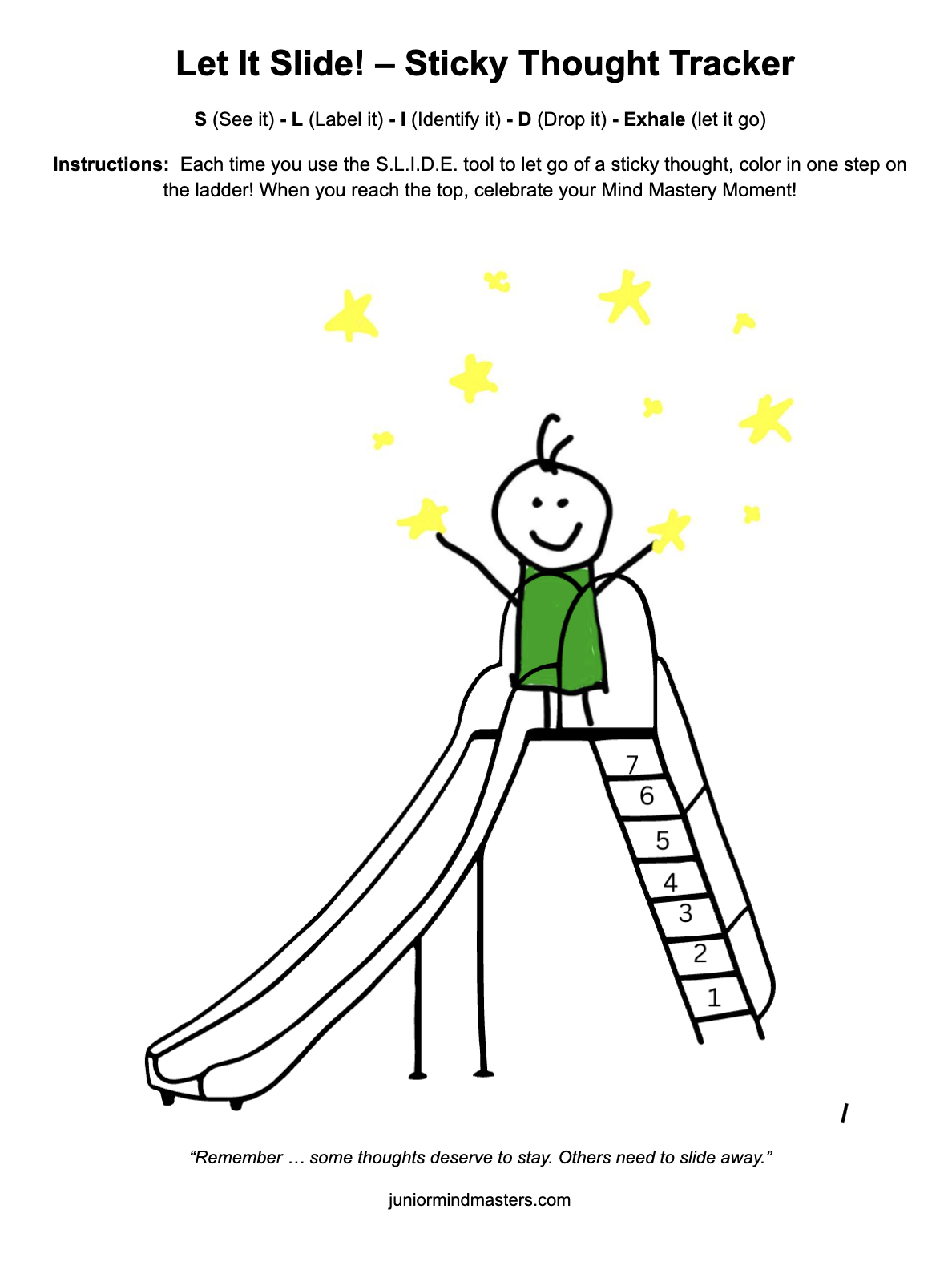
S.L.I.D.E. (Sticky Thought) Tracker
A tool to help kids recognize, name and release unwanted “sticky” thoughts.
-
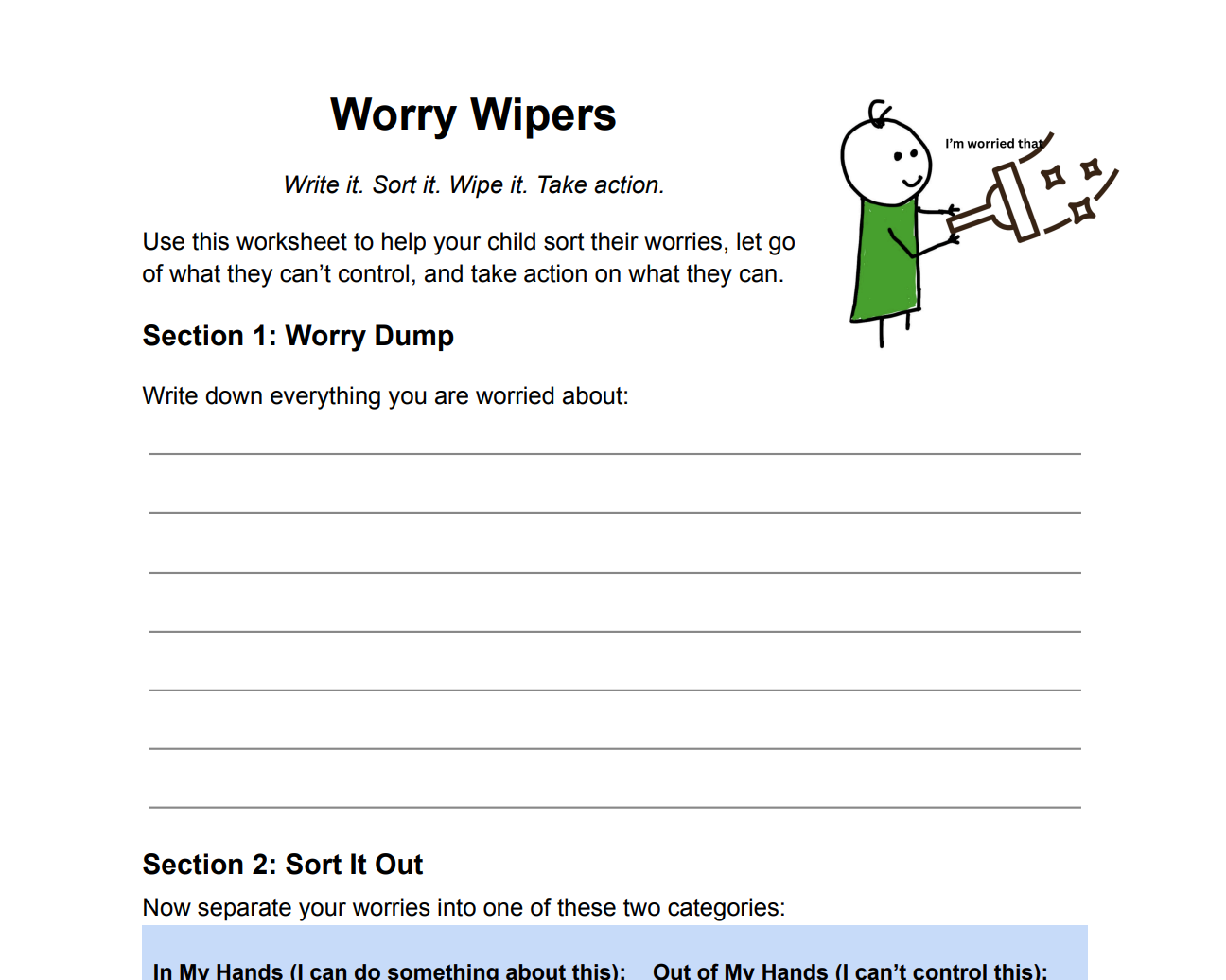
Worry Wipers Worksheet
This worksheet helps your child sort their worries, let go of what they can’t control, and take action on what they can.
-
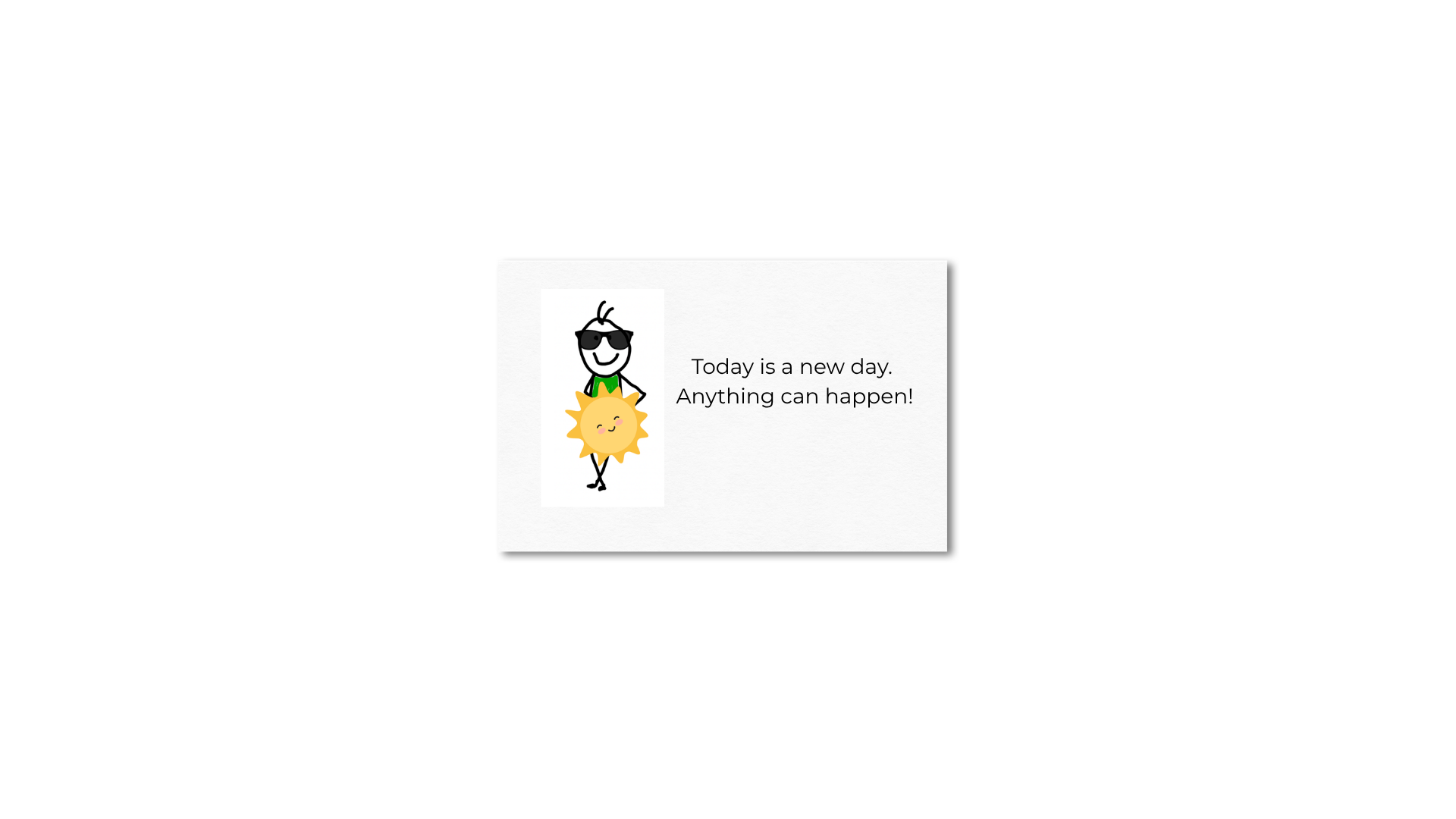
Morning Mindset Cards
Instructions (and examples) for making Morning Mindset Cards to start your child’s day off right.
-
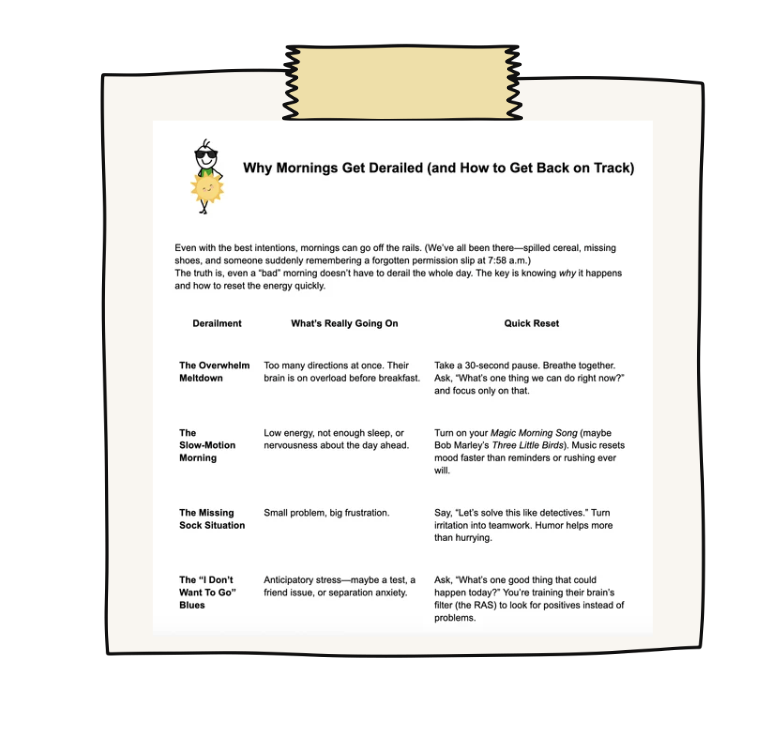
Why mornings Get Derailed (and How to Get Them Back of Track)
Figure out what is going on with your derailed morning and learn ways to get it back on track with this one-page chart.
Emotional Awareness
-
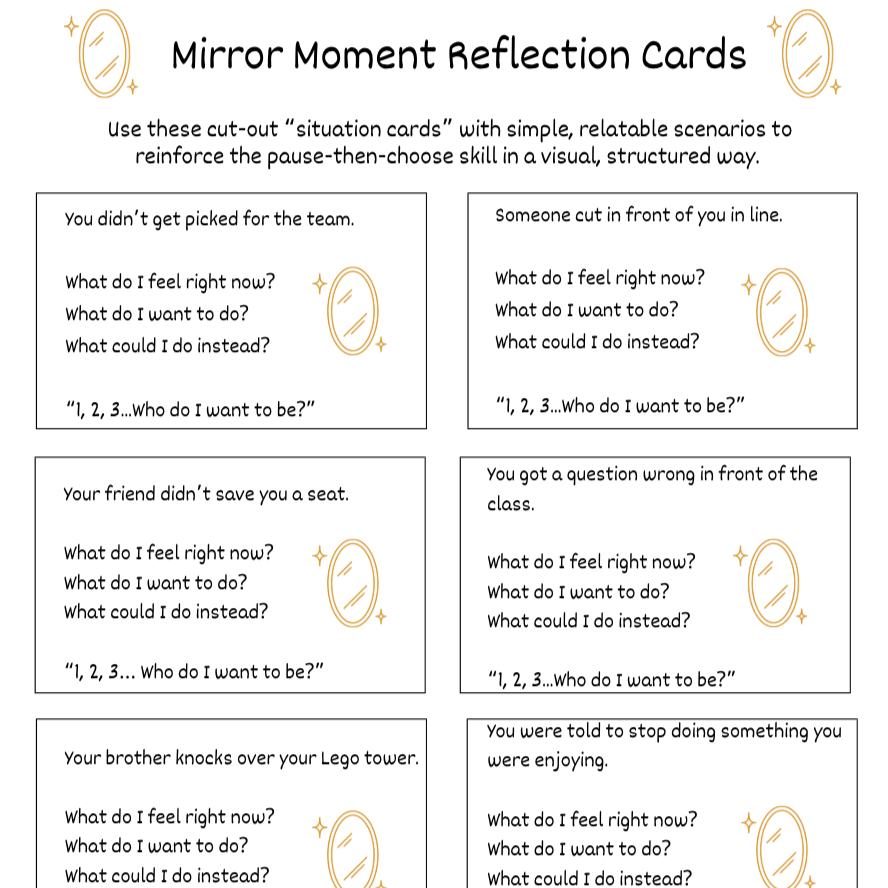
Mirror Moment Reflection Cards
A set of thoughtful prompts designed to help children pause, reflect, and consider how their thoughts influence their behavior. These cards encourage self-awareness and help kids practice looking inward for answers.
-
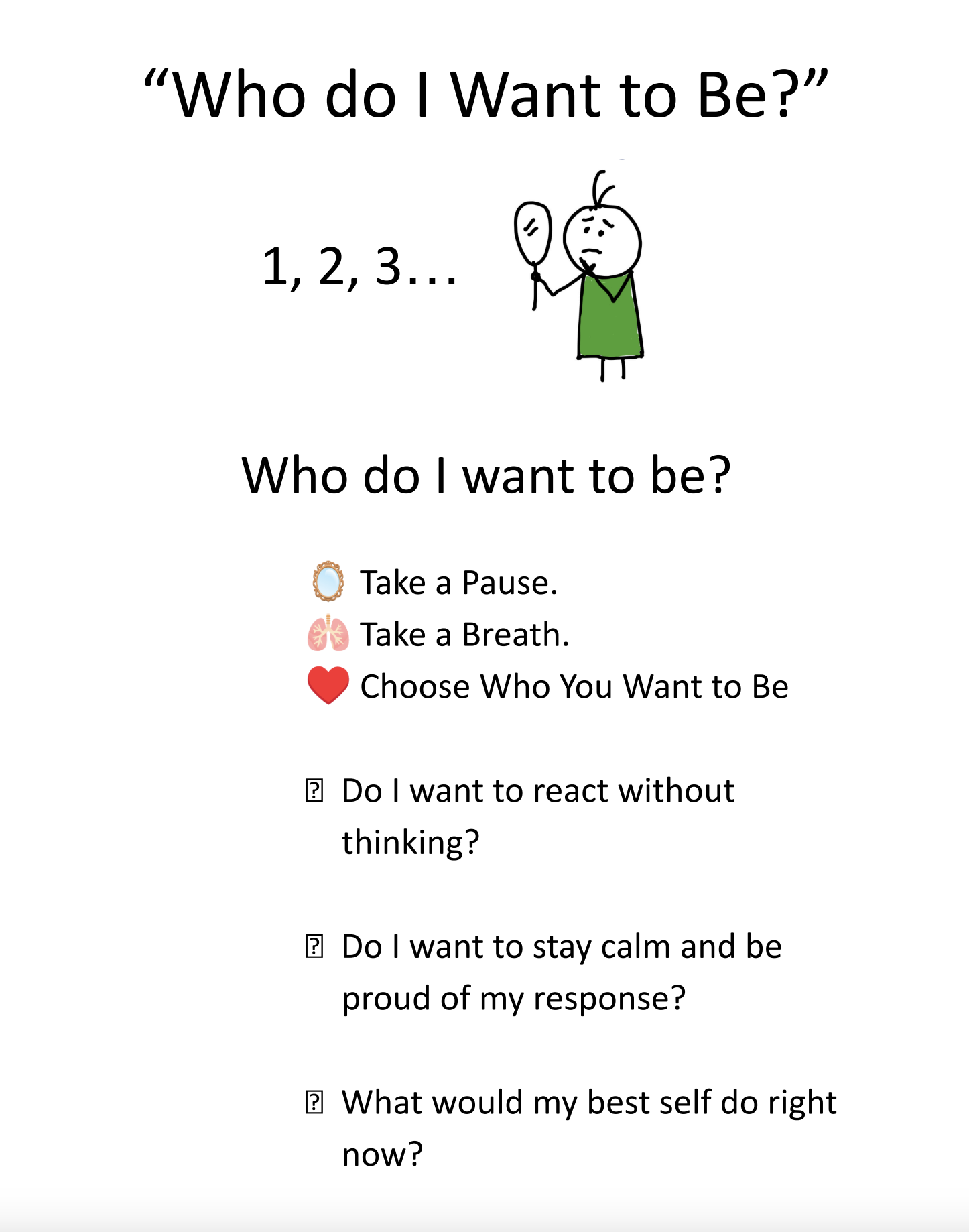
Mirror Moment Prompt Page
A printable reflection page that helps children slow down and explore what they are thinking and feeling in challenging moments. This tool supports emotional awareness and thoughtful decision-making.
-
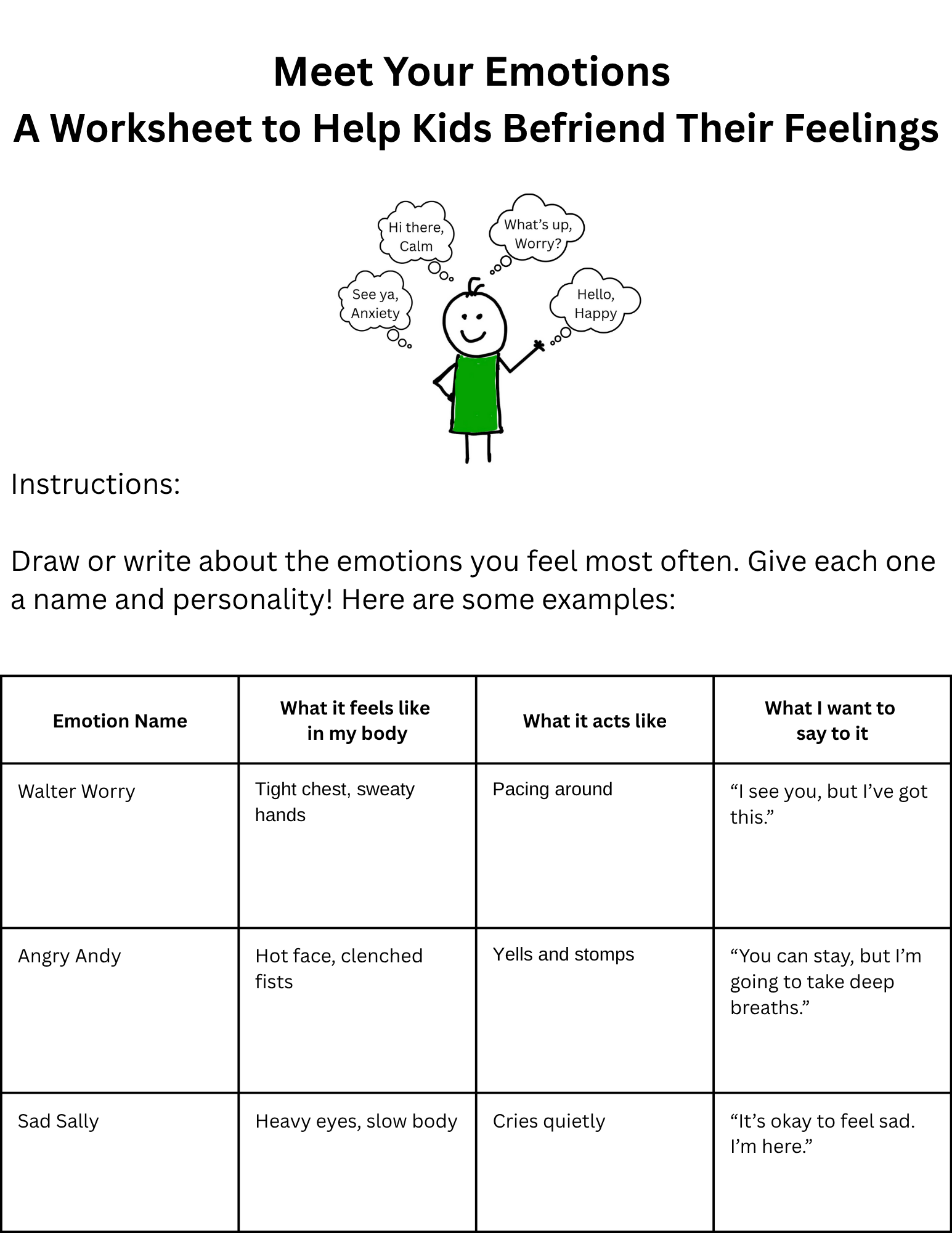
Meet Your Emotions Worksheet
An introduction to emotional awareness. This worksheet helps children recognize different emotions, understand what they are feeling, and begin learning healthy ways to respond to those emotions.
Building Positive Habits
-
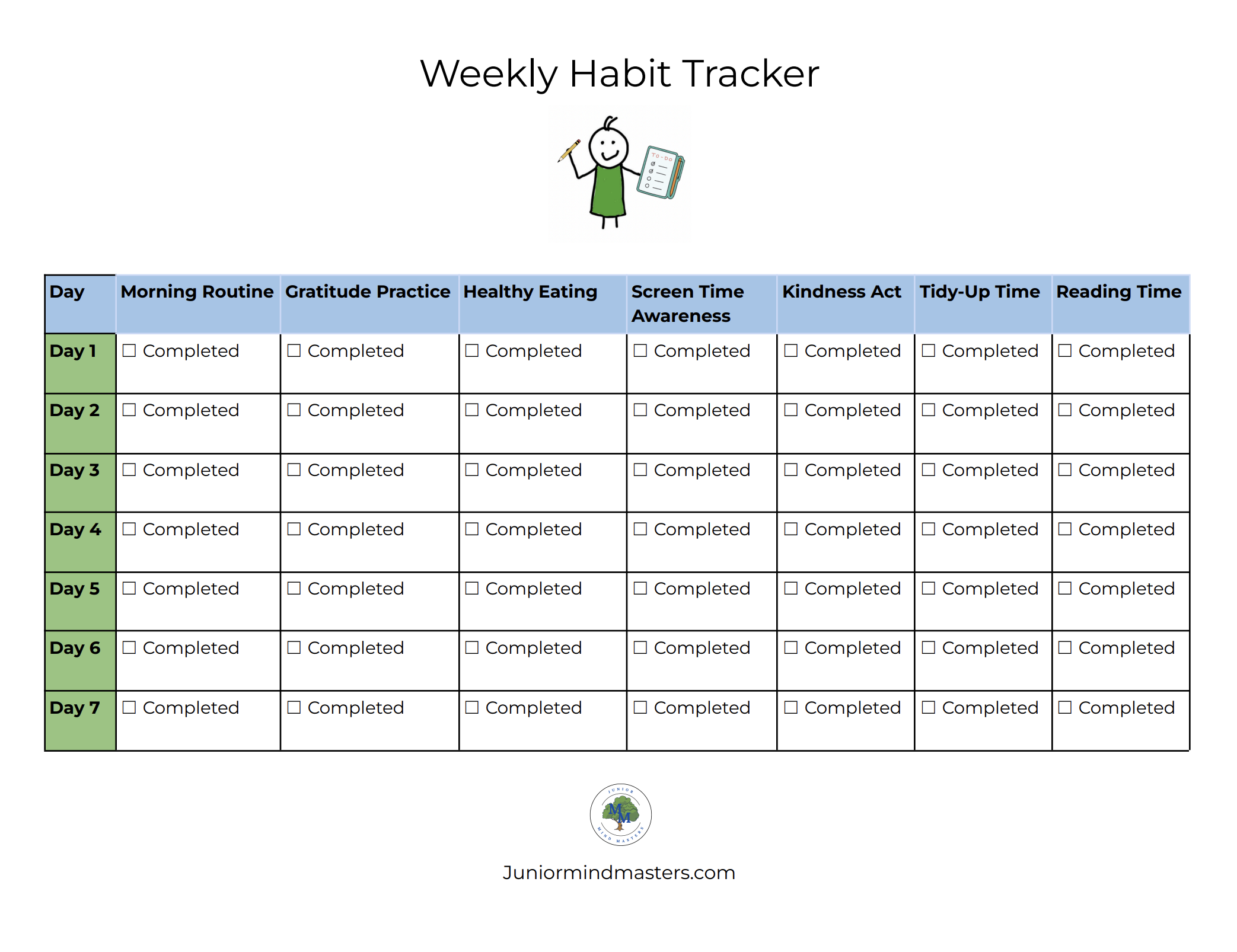
Example Habit Tracker
A sample tracker that shows children how small daily habits can lead to powerful changes over time. Use it as a guide for helping kids build routines that support growth, responsibility, and positive thinking.
-
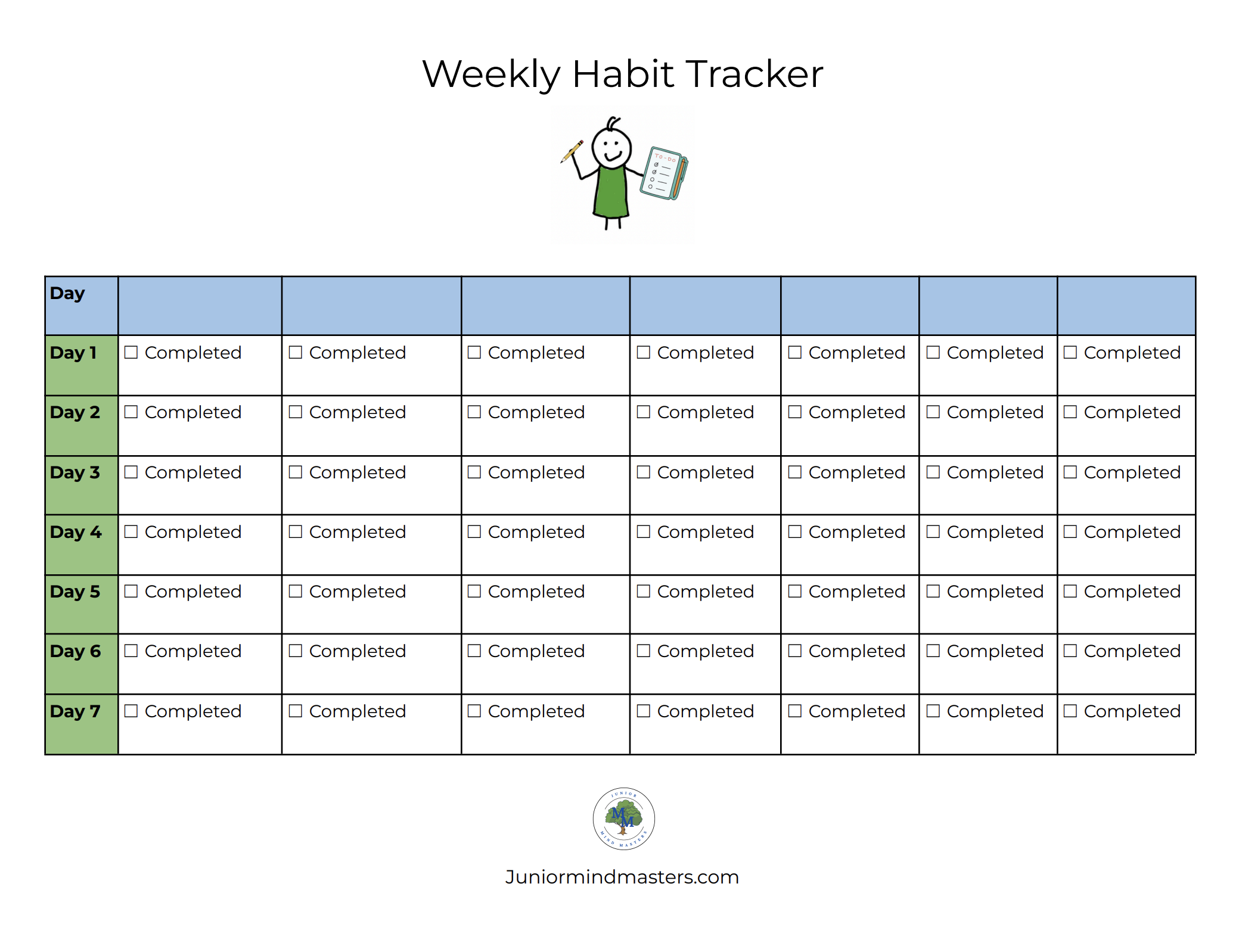
Blank Habit Tracker
A flexible tracker that allows children to create and monitor their own habits.
-

Coding Habits Worksheet
A creative way for children to design the habits they want to build. Kids learn how small repeated actions create patterns that shape their behavior and help them become the person they want to be.
Confidence & Growth
-
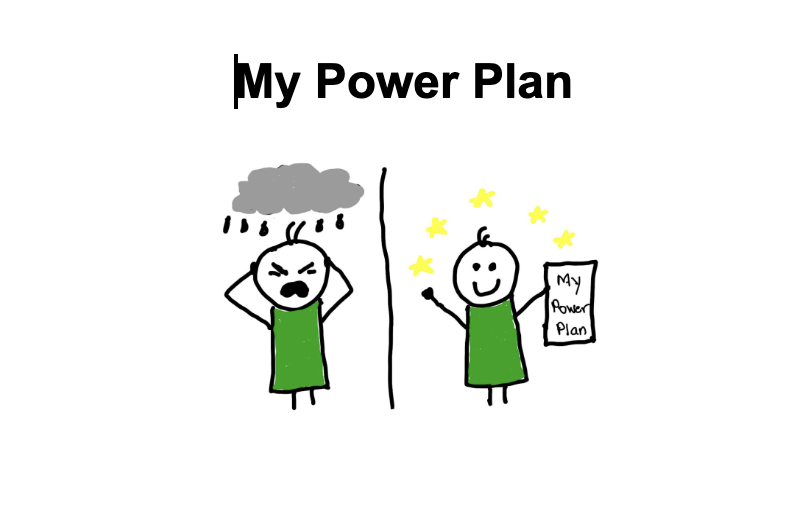
My Power Plan Worksheet
A simple planning tool that helps children understand how they can prepare ahead of time for challenging situations.
-
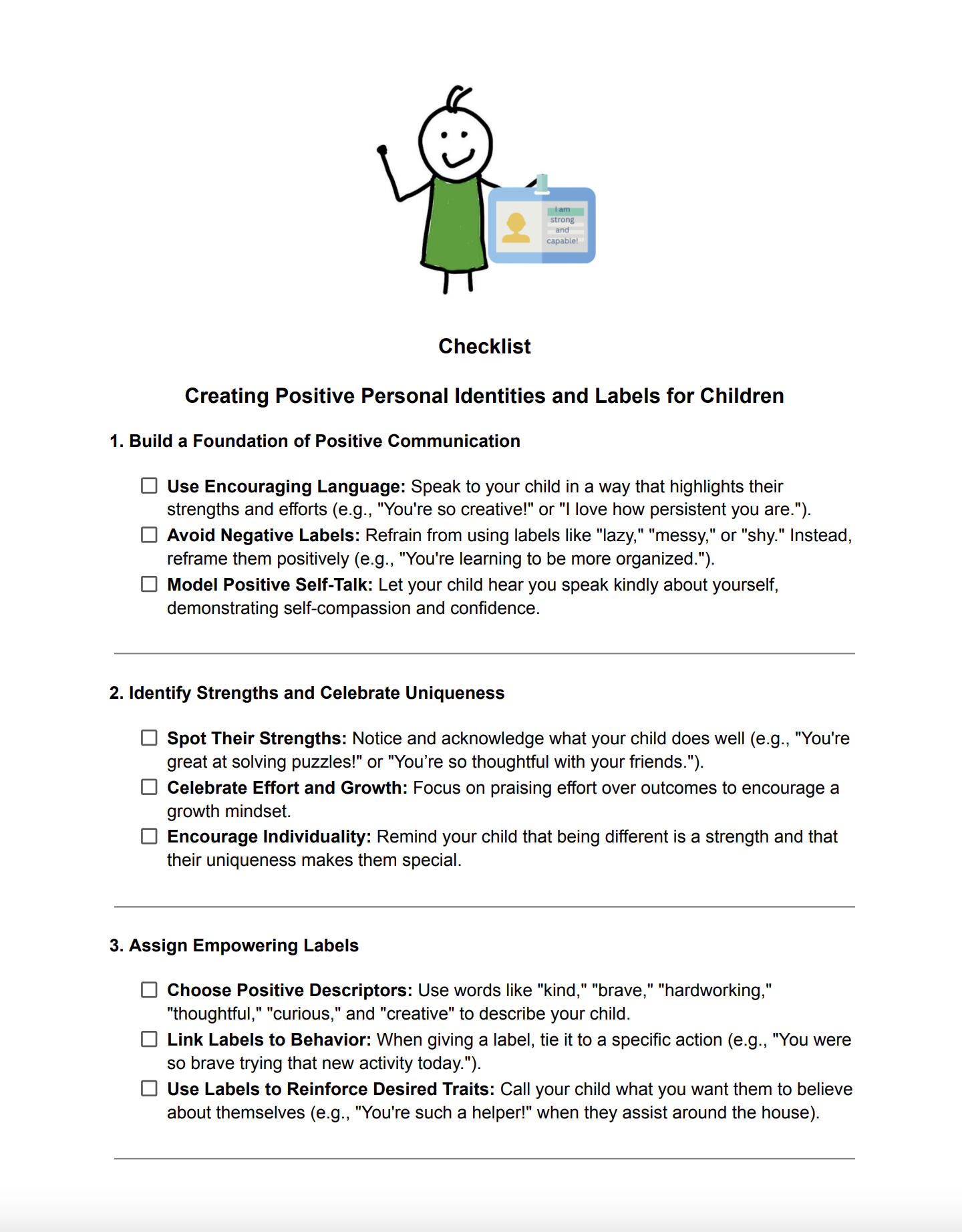
Positive Identity Checklist
A checklist for parents to help their child build a positive self-image.
-
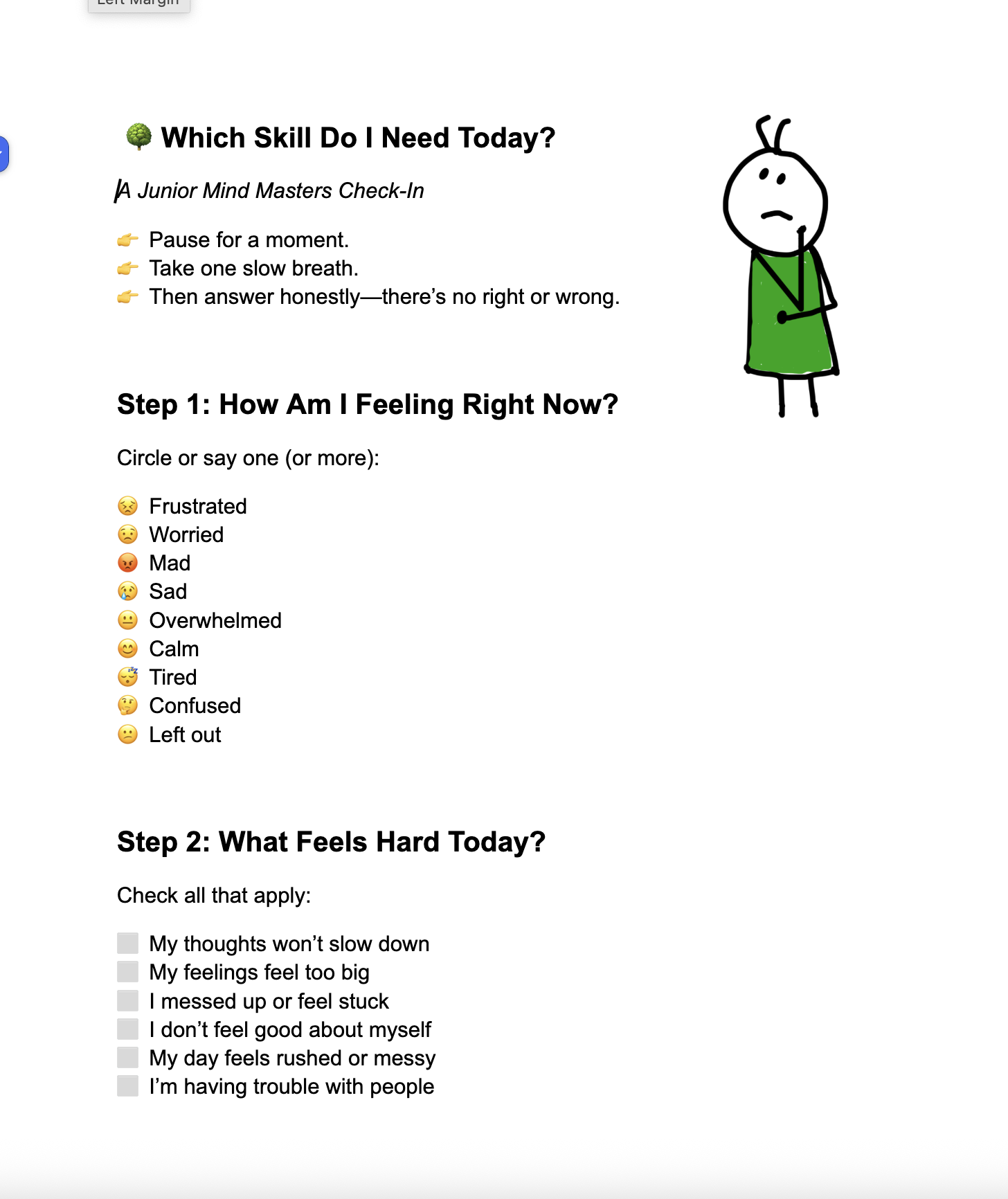
Which Skill Do I Need Today? Check-In
A quick daily check-in that helps children pause and identify which mindset skill might help them most in the moment.
New to Junior Mind Masters?
Start with the Mind Magic Starter Kit, a simple introduction to helping children understand their thoughts and build emotional strength.